


Description
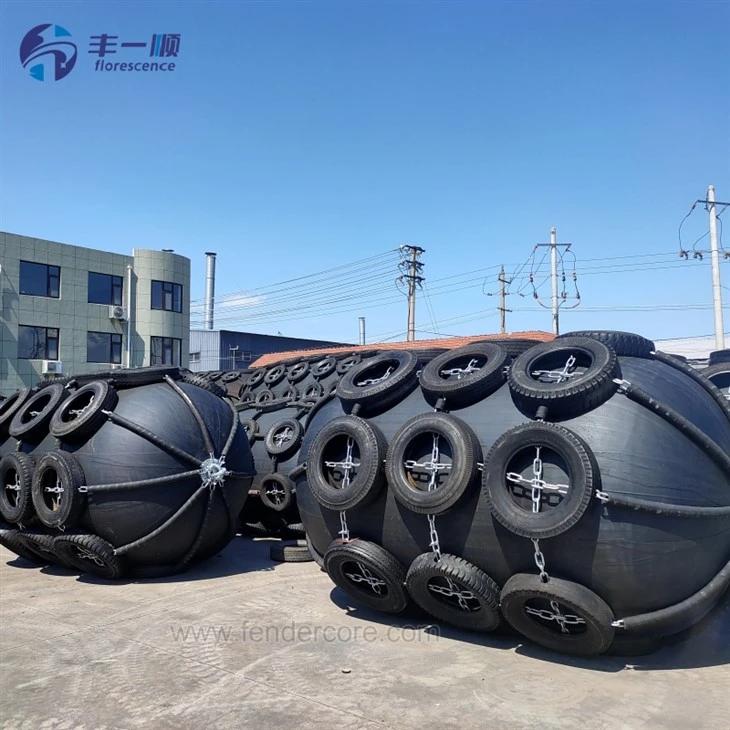
FLORESCENCE floating rubber fender is installed on docks or vessels to absorb berthing and mooring impact energy between ship–dock or ship–ship. Key advantages include low reaction force, low surface pressure, and rational energy absorption. Unaffected by vessel size, they are especially suitable for docks with significant tidal ranges.
Floating Fender is installed on the dock or ship, to absorb the collision energy between the ship and the dock or ship when berthing or mooring, and to protect the ship and the dock from damage.
Floating Rubber Fender has the advantages of low reaction force, small surface pressure and reasonable energy absorption. In berthing, the ship rolling and pitching adaptability, it will not affected by the size of the ship and is widely used for installation and maintenance convenient, especially suitable for the dock.
Advantages
1. Save more time to deploy, not as the solid marine rubber fenders.
2. The floating marine rubber fender has very low reaction, high energy absorption.
3. The floating yokohama rubber fender is suitable for all kinds of ship.
4. Ease of transportation especially for larger dimensions, all in standard transport.
5. Easy to install and to inflate, also easy to keep the fenders in warehouse.
Product Show


Core Advantages
Deployment Efficiency: Saves more installation time compared to solid rubber fenders.
Mechanical Performance: Very low reaction force combined with high energy absorption – protects both hull and dock structure.
Wide Vessel Adaptability: Suitable for all vessel types (from small yachts to large LNG carriers and cruise ships); accommodates vessel rolling and pitching.
Logistics Friendly: Larger sizes can be shipped via standard containers; deflated and compressed before delivery – easy transport and warehouse storage.
Simple Installation & Maintenance: Only need on-site inflation; can be stored deflated to save space.
Floating marine rubber fender Delivery
Chain and tire net are adjusted on Fender before delivery and all accessories checked. Pneumatic Fenders are deflated and pressed to be delivered on their operating site.

Larger sizes are pulled out from their chain and tire nets to be containerised more easily.

Rubber fender outlook

Our clients.


Floating Rubber Fender FAQ:
Q1: What is the main difference between floating rubber fenders and solid rubber fenders?
A: Floating fenders float with water level – unaffected by tidal range. They offer lower reaction force and higher energy absorption, plus easier logistics (deflated compression). Solid fenders suit fixed water levels and high-frequency impact.
Q2: How does it remain effective at docks with large tidal ranges?
A: The floating design keeps the fender at the water surface, maintaining correct contact position between vessel and dock regardless of tide level.
Q3: What equipment is required for on-site installation?
A: Only a compressed air source for inflation; lifting can be done by standard port crane or ship crane. No special tools needed.
Q4: What is the maximum size available? Is transport difficult?
A: Large diameters are available. Before transport, they are deflated, compressed, and can have chain/tire net detached – allowing standard container shipment, greatly reducing logistics difficulty.
Q5: How to maintain and store the fender?
A: When not in use for long periods, deflate and fold for storage – saves warehouse space. Before reuse, simply inflate and check the surface and accessories. Tire net can be replaced separately.
Hot Tags: floating rubber fender, China, suppliers, manufacturers, factory, price, pneumatic fender tire gauge, fpso pneumatic fender with tire


