


Inflatable Rubber Air Bags & Marine Docking Rolling Bags


Product Overview
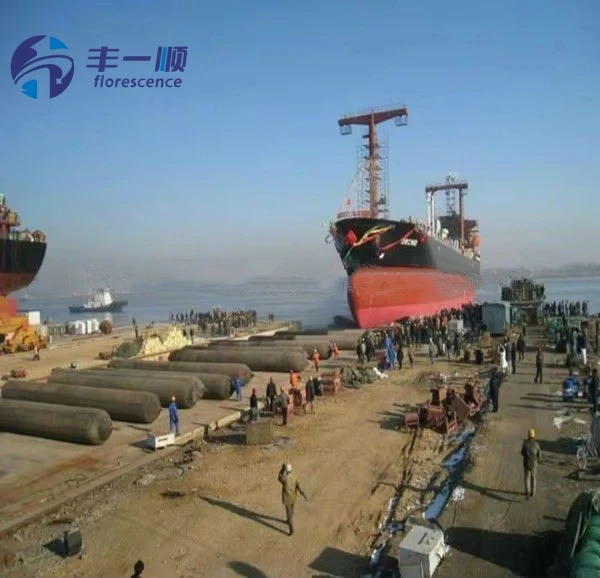
FLORESCENCE Inflatable Rubber Air Bags (also referred to as marine docking bags or pneumatic rolling bags) represent a revolutionary, highly flexible alternative to traditional rigid ship launching and docking infrastructures. By eliminating the need for expensive, permanently constructed prefabricated slipways, this mobile launching system drastically reduces capital investment, slashes project turnaround times, and minimizes coastal land utilization.
A defining engineering advantage of these marine rubber airbags is their adjustable working height. By dynamically regulating the internal air pressure, salvage masters and shipyard engineers can precisely alter the vessel's center of gravity and changing directions during maneuvers-a level of control completely unavailable with conventional fixed-rail or rigid graving dock systems.


Key Strategic Advantages
Zero-Maintenance & Compact Storage: Unlike mechanical docks, marine airbags require no post-operational structural maintenance. After deployment, they are simply washed with fresh water, deflated, and folded into a minimal footprint for compact warehouse storage until their next mission.
Superior Hull Protection: The natural elastomeric properties of heavy-duty rubber act as a high-performance shock absorber, distributing the vessel's deadweight evenly across the rolling surface and mitigating structural stress on the keel.
Minimal Site Infrastructure Requirements: Deploying this system requires zero permanent civil engineering works. The operational ground only needs sufficient load-bearing capacity and the removal of sharp debris or metallic protrusions.
Eco-Friendly Operations: Traditional slipway launching relies heavily on toxic chemical slipway grease and tallow lubricants that pollute marine ecosystems. Marine airbags operate purely on mechanical rolling friction, making them a 100% clean and compliant solution for modern green shipyards.
Low Equipment Footprint: The entire system requires minimal mechanical rigging. A standard shipyard launch can be successfully executed using only an industrial air compressor, a heavy-duty positioning winch, and high-tensile steel cables.
Cross-Industry Marine Applications
Vessel Launching & Upgrading: Seamless undocking and hoisting of commercial ships, barges, and supply vessels.
Heavy Component Transport: Short-distance land transport of massive concrete caissons, bridge sections, offshore drilling equipment, and monolithic structures.
Marine Salvage & Refloating: Providing external buoyancy to refloat grounded vessels, clear marine wrecks, and support damaged hulls.
Civil Infrastructure Support: Erecting temporary pontoon bridges, floating piers, and marine water transport channels during emergency coastal operations.
Emergency Coastal Defense: Serving as heavy-duty auxiliary pneumatic barriers during critical flood control and typhoon prevention dam reinforcement.
Technical Specifications Matrix
Our marine docking rubber airbags are manufactured using high-tensile synthetic-tire-cord reinforcement layers to withstand severe working pressures:
| External Diameter (m) | Effective Length (m) | Synthetic-Cord Layers | Safe Working Pressure | Maximum Lifting Height | Rated Load Capacity (Tons/Airbag) |
| 1.2m | 10m | 6 Layers | 0.17 MPa | 0.9m | 78.51 Tons |
| 1.5m | 12m | 8 Layers | 0.18 MPa | 1.2m | 100.50 Tons |
| 1.8m | 15m | 8 Layers | 0.15 MPa | 1.5m | 104.69 Tons |
| 2.0m | 18m | 10 Layers | 0.17 MPa | 1.5m | 235.54 Tons |
| 2.5m | 18m | 12 Layers | 0.16 MPa | 2.0m | 226.12 Tons |
*Note: The actual load capacity (Tons per Airbag) varies dynamically based on the current contact area and the actual compressed height during operation. Custom diameters up to 3.0m and specialized length profiles can be custom-engineered.
Marine Airbag FAQ
Operation & Requirements
Q1: How does adjusting pressure help change a ship's direction?
A: By selectively inflating or deflating specific rows of airbags, you alter their height and rolling friction. This uneven pressure allows teams to pivot or realign the hull safely to navigate narrow or angled waterways.
Q2: What are the minimum site and equipment prerequisites?
A: You need a cleared ground/slipway with solid load-bearing capacity (free of sharp debris). Required equipment is minimal: an industrial air compressor, a heavy-duty towing winch, and high-tensile steel wire ropes.
Sustainability & Value
Q3: Why are airbags more sustainable than traditional slipways?
A: Traditional slipways require heavy concrete structures and toxic chemical lubricants (like paraffin wax or grease) that wash into the sea. Airbags rely purely on the rolling friction of eco-friendly natural rubber, completely eliminating chemical pollution.
Applications & Materials
Q4: What are marine airbags mainly used for?
A: Ship launching and landing (dry-docking), heavy structural cargo transport, marine salvage operations, and floating construction projects.
Q5: What materials are used in your airbags?
A: High-tensile synthetic tire-cord layers (for internal reinforcement) matrixed with premium, abrasion-resistant natural rubber.
Q6: How many layers are available?
A: Standard configurations range from 3 to 12 layers depending on your specific target working pressure and vessel weight requirements.



Hot Tags: inflatable rubber air bags, China, suppliers, manufacturers, factory, price, boat launching safety cushion, marine airbag for heavy duty launching, ship launching abrasion resistant airbag, marine airbag for light weight launching, vessel launching safety equipment, marine airbag for waterproof launching


