

Do boat lift air bags have a maximum load limit per bag? This is a question that often arises among boat owners, marine operators, and those involved in ship salvage operations. As a supplier of Boat Lift Air Bags, I am frequently asked about the load - bearing capacity of these essential marine tools. In this blog, we will delve into the science behind boat lift air bags and explore whether they indeed have a maximum load limit per bag.
Understanding Boat Lift Air Bags
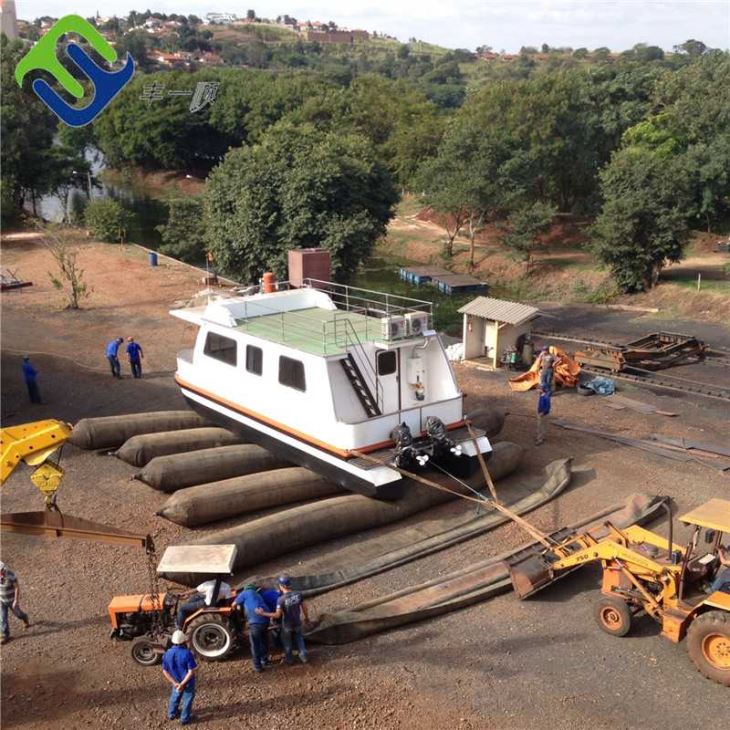
Boat lift air bags are inflatable devices designed to provide buoyancy and support for boats, ships, and other marine structures. They are typically made from high - strength synthetic rubber materials, which are resistant to abrasion, puncture, and the harsh marine environment. These air bags are used in a variety of applications, including boat launching and retrieval, ship salvage, and dry - docking.
The basic principle of boat lift air bags is straightforward. When inflated, the air bags displace a large volume of water, creating an upward buoyant force. This force can be used to lift heavy objects out of the water or support them during various operations. The amount of buoyant force generated by an air bag depends on several factors, including its size, shape, and the pressure of the air inside.

Factors Affecting Load Capacity
There are several key factors that determine the maximum load limit of a boat lift air bag.
Size and Volume
The size of an air bag is one of the most significant factors affecting its load - bearing capacity. Larger air bags have a greater volume and can displace more water, resulting in a higher buoyant force. For example, a large - diameter, long air bag will generally be able to support more weight than a smaller one. The volume of an air bag is calculated based on its geometric dimensions, and the buoyant force is proportional to the volume of water displaced.
Material Strength
The strength of the material used to construct the air bag is crucial. High - quality synthetic rubber materials are designed to withstand high pressures and resist damage. The material's tensile strength, tear resistance, and elasticity all play a role in determining how much weight the air bag can support. A stronger material can handle more stress without rupturing or failing, allowing the air bag to carry heavier loads.
Inflation Pressure
The inflation pressure of the air bag also affects its load capacity. Increasing the inflation pressure increases the stiffness of the air bag and can enhance its ability to support weight. However, there is a limit to how much pressure an air bag can withstand. Over - inflating an air bag can cause it to burst, leading to a sudden loss of support and potentially dangerous situations. Therefore, it is essential to follow the manufacturer's recommended inflation pressure for each air bag.
Operating Conditions
The operating conditions in which the air bag is used can also impact its load - bearing capacity. Factors such as water temperature, salinity, and the presence of sharp objects or rough surfaces can affect the performance and durability of the air bag. For example, in cold water, the material of the air bag may become more brittle, reducing its strength. Additionally, contact with sharp objects can cause punctures or cuts, which can compromise the air bag's integrity and reduce its load - bearing capacity.
Determining the Maximum Load Limit
Manufacturers of boat lift air bags conduct extensive testing to determine the maximum load limit for each model. These tests are carried out in controlled environments and take into account the factors mentioned above. The load limit is usually specified in terms of the maximum weight that the air bag can safely support under ideal conditions.
It is important to note that the maximum load limit is a conservative estimate. In real - world applications, it is recommended to use a safety factor to account for uncertainties and potential variations in operating conditions. A common safety factor used in the marine industry is 1.5 to 2 times the maximum load limit. This means that if an air bag has a rated maximum load limit of 10 tons, it is advisable to use it to support a load of no more than 5 - 6.67 tons to ensure a high level of safety.
Applications and Load Limits in Different Scenarios
Boat Launching and Retrieval
In boat launching and retrieval operations, boat lift air bags are used to lift the boat out of the water or lower it into the water. The load limit of the air bags used in these operations depends on the weight of the boat. Smaller boats may require only one or two air bags, while larger yachts or commercial vessels may need multiple air bags working in tandem. For example, a small fishing boat weighing a few tons may be supported by a couple of medium - sized air bags, while a large cruise ship weighing thousands of tons would require a large number of high - capacity air bags.
Ship Salvage
Ship salvage operations often involve lifting sunken or grounded ships. Ship Salvage Airbag are specifically designed for these high - stress applications. In ship salvage, the load limits of the air bags are critical as they need to support the immense weight of the ship. Marine Salvage Airbag For Shipwreck and Ship Salvage Lifting Airbag are engineered to have high load - bearing capacities and are often used in combination to distribute the weight evenly. The number and size of air bags used in ship salvage operations are carefully calculated based on the size, weight, and condition of the ship.
Importance of Adhering to Load Limits
Adhering to the maximum load limit of boat lift air bags is of utmost importance for safety reasons. Overloading an air bag can lead to catastrophic failure, which can result in injury, damage to property, and environmental harm. For example, if an air bag bursts during a ship salvage operation, it can cause the ship to shift unexpectedly, endangering the lives of the salvage crew and potentially causing further damage to the ship.
In addition to safety, following the load limits also ensures the longevity of the air bags. Using air bags within their rated capacity reduces the stress on the material, minimizing the risk of premature wear and tear. This means that the air bags can be used for multiple operations, providing cost - effective solutions for marine operations.
Conclusion
In conclusion, boat lift air bags do have a maximum load limit per bag. This limit is determined by a combination of factors, including size, material strength, inflation pressure, and operating conditions. As a supplier of Boat Lift Air Bags, we are committed to providing high - quality products with clearly defined load limits. We conduct rigorous testing to ensure that our air bags meet the highest standards of safety and performance.
If you are in the market for boat lift air bags for your boat launching, retrieval, or ship salvage needs, it is essential to choose the right air bags based on the load requirements. Our team of experts can assist you in selecting the appropriate air bags and providing guidance on their proper use. We understand the importance of load limits and are dedicated to helping you achieve safe and successful marine operations.
Contact us today to discuss your specific requirements and explore our range of Boat Lift Air Bags. We look forward to partnering with you for all your marine lifting needs.
References
- Marine Engineering Handbook, various editions
- Standards and Guidelines for Marine Air Bag Use, International Maritime Organizations
- Research Papers on Buoyancy and Load - Bearing Capacity of Inflatable Structures