

Yo, what's up everyone! I'm a supplier for Yokohama Fender products, and today I'm gonna spill the beans on what materials are used in these awesome fenders.
Let's start with the basics. Yokohama Fenders are well - known for their durability and performance, and a big part of that comes down to the materials they're made of. The primary material in most Yokohama Fender products is rubber. Rubber is an ideal choice for fenders because it has some really cool properties.
First off, rubber is super elastic. When a ship bumps into a fender, the rubber can stretch and deform to absorb the energy of the impact. Then, once the force is removed, it bounces back to its original shape. This ability to absorb and release energy is crucial for protecting both the ship and the dock. It reduces the damage that can be caused by collisions, which can save a ton of money on repairs.
The type of rubber used in Yokohama Fenders is usually high - quality synthetic rubber. Synthetic rubber is made in a lab, and it can be engineered to have specific properties. For example, it can be made more resistant to abrasion, which is really important since fenders are constantly rubbing against ships and other objects. It can also be made more resistant to environmental factors like UV rays, ozone, and saltwater. These factors can break down natural rubber over time, but synthetic rubber can hold up much better.
In addition to the rubber, there are also other components in Yokohama Fenders. One of these is the fabric reinforcement. Inside the rubber, there are layers of strong fabric. This fabric acts like a skeleton for the fender, giving it extra strength and stability. The fabric is usually made of materials like polyester or nylon. These materials are known for their high tensile strength, which means they can withstand a lot of pulling force without breaking.
The fabric reinforcement is arranged in a specific pattern to maximize its effectiveness. It helps distribute the stress evenly across the fender when it's under pressure. This way, the fender doesn't get damaged easily in one spot, but can handle the impact more uniformly.
Another important part of Yokohama Fenders is the valve system. The valve is used to inflate and deflate the fender. It needs to be made of a material that is both strong and air - tight. Usually, the valve is made of a combination of metal and rubber. The metal part provides the structural integrity, while the rubber seals the valve to prevent air from leaking out.
Now, let's talk about the different types of Yokohama Fenders and how the materials work in each one.
Yokohama Floating Fender
The Yokohama Floating Fender is designed to float on the water. This type of fender needs to be able to withstand the harsh marine environment. The rubber used in these fenders is especially formulated to be resistant to water, salt, and the constant movement of the waves. The fabric reinforcement is also crucial here, as it helps the fender maintain its shape even when it's floating and being tossed around. The valve system in a floating fender is designed to be extra reliable, since any air leakage could cause the fender to sink.
Pneumatic Rubber Fenders For Ships
Pneumatic Rubber Fenders For Ships are used when ships are docking or berthing. These fenders need to be able to absorb a large amount of energy quickly. The rubber in these fenders is made to be very flexible and have a high energy - absorption capacity. The fabric reinforcement is optimized to handle the high - stress situations that occur when a large ship makes contact with the fender. The valve system in these fenders allows for easy inflation and deflation, so they can be adjusted according to the size and weight of the ship.
Rubber Inflatable Fender With Good Quality
The Rubber Inflatable Fender With Good Quality is a popular choice for many applications. It offers a good balance between performance and cost. The rubber used in these fenders is still of high quality, but it may be a bit more cost - effective than the rubber used in some of the more specialized fenders. The fabric reinforcement and valve system are also designed to meet the needs of general - purpose use.
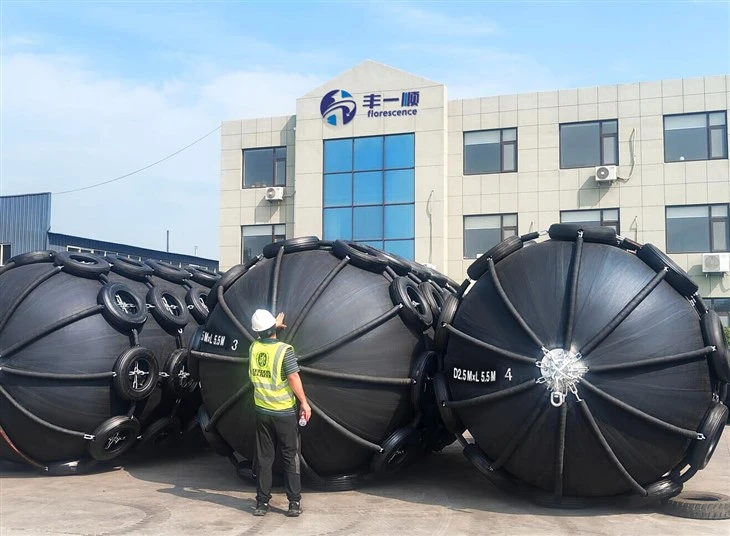

When it comes to manufacturing Yokohama Fenders, the process is very precise. The rubber, fabric, and other components are carefully selected and combined. First, the fabric is cut into the right sizes and shapes. Then, it's coated with a layer of rubber to make it more compatible with the outer rubber layer. After that, the layers of fabric and rubber are stacked together and molded into the shape of the fender.
The molding process is done under high pressure and temperature. This helps the rubber and fabric bond together tightly, creating a strong and durable fender. Once the fender is molded, it goes through a series of quality checks to make sure it meets the strict standards set by Yokohama.
As a supplier of Yokohama Fender products, I've seen firsthand how these materials and manufacturing processes result in high - quality fenders. Whether you're running a small marina or a large commercial port, having reliable fenders is essential. And with Yokohama Fenders, you can be confident that you're getting a product that is built to last.
If you're in the market for fenders for your ships or docks, I'd highly recommend considering Yokohama Fender products. The combination of high - quality rubber, fabric reinforcement, and a well - designed valve system makes them a top choice in the industry. And as a supplier, I'm here to help you find the right fender for your specific needs. Whether you need a floating fender for a waterfront property or a pneumatic fender for a large cargo ship, I can assist you in making the best decision.
So, if you're interested in learning more or want to start the procurement process, don't hesitate to reach out. We can discuss your requirements in detail and get you the fenders that will work best for you.
References:
- Industry knowledge and experience as a Yokohama Fender supplier
- General understanding of rubber and fabric materials used in engineering applications