

Submarine fenders play a crucial role in protecting submarines during docking, berthing, and other operations. Understanding their thermal properties is essential for ensuring their performance, durability, and safety. As a supplier of submarine fenders, I have in - depth knowledge of these products and their thermal characteristics.
1. Importance of Thermal Properties in Submarine Fenders
Thermal properties have a significant impact on the functionality of submarine fenders. Submarines operate in diverse environments, from cold polar waters to warm tropical seas. Temperature variations can affect the physical and mechanical properties of the fender materials. For example, extreme cold can make the fender materials brittle, reducing their ability to absorb energy during impact. On the other hand, high temperatures can cause the materials to soften, leading to deformation and reduced load - bearing capacity.
Moreover, during the operation of submarines, fenders may experience frictional heating when in contact with the docking structures. If the fenders cannot dissipate this heat effectively, the accumulated heat can lead to premature aging of the materials, such as rubber degradation. This can compromise the fender's performance and shorten its service life.
2. Thermal Conductivity of Submarine Fenders
Thermal conductivity is a key thermal property that describes the ability of a material to conduct heat. In the case of submarine fenders, different types of materials have different thermal conductivities.
- Rubber - based Fenders: Many submarine fenders are made of rubber, such as Navy Submarine Rubber Fender. Rubber generally has a relatively low thermal conductivity. This is beneficial in some ways because it can act as an insulator, reducing the heat transfer between the submarine and the docking environment. However, it also means that rubber fenders may have difficulty dissipating heat generated from friction. To address this issue, some advanced rubber formulations incorporate additives or fillers that can improve the thermal conductivity to a certain extent without sacrificing other important properties like elasticity and impact resistance.
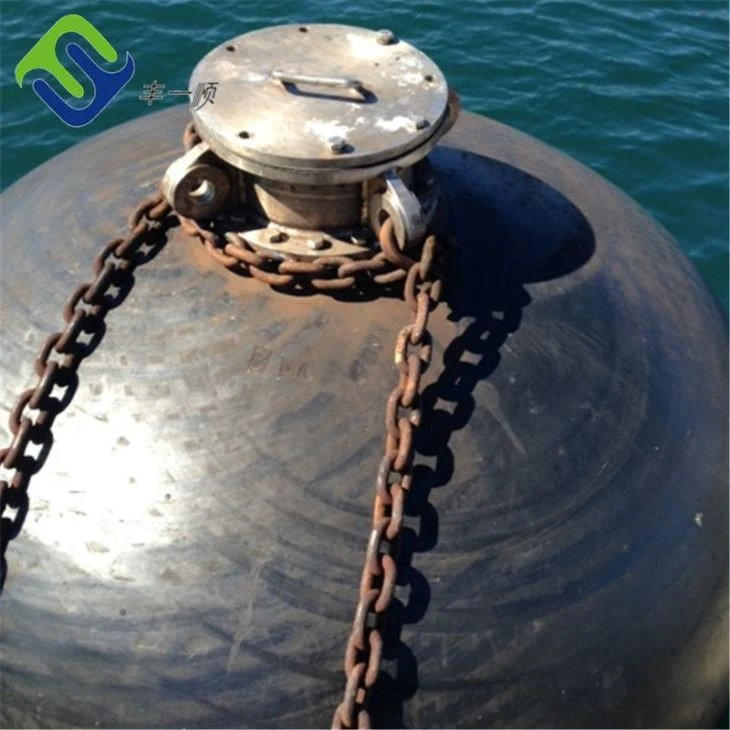
- Pneumatic Fenders: Submarine Pneumatic Fender is another common type. The air inside the pneumatic fender has a very low thermal conductivity. The outer rubber shell of the pneumatic fender also has low thermal conductivity. This combination provides a certain degree of thermal insulation. But during continuous use, the heat generated inside the fender due to air compression and friction needs to be managed properly. Some pneumatic fenders are designed with ventilation systems or heat - dissipating structures to ensure that the internal temperature does not rise too high.
- Hydro - Pneumatic Rubber Fenders: Submarine Hydro Pneumatic Rubber Fender combines the features of hydro and pneumatic systems. The thermal conductivity of these fenders is a complex function of the rubber material, the water and air inside the fender. The water in the hydro - pneumatic fender can act as a heat - transfer medium to some extent. However, the rubber shell still has the challenge of heat dissipation. Designers often use materials with better heat - transfer properties for the internal structures or add heat - exchange elements to improve the overall thermal management.
3. Thermal Expansion and Contraction
Thermal expansion and contraction are important factors that need to be considered in the design and application of submarine fenders. As the temperature changes, the materials of the fenders will expand or contract.

- Dimensional Changes: For rubber fenders, when the temperature rises, the rubber will expand. This can lead to changes in the shape and size of the fender. If the fender is installed in a confined space, the expansion may cause excessive stress on the fender itself or the mounting structure. Conversely, in cold temperatures, the rubber will contract, which may reduce the contact area between the fender and the submarine or the docking structure, affecting the energy - absorption performance.
- Impact on Sealing: In pneumatic and hydro - pneumatic fenders, thermal expansion and contraction can also affect the sealing performance. For example, the rubber seals in these fenders may expand or contract with temperature changes. If the expansion or contraction is not properly accounted for, it can lead to air or water leakage, which will significantly reduce the fender's performance.
4. Heat Resistance of Submarine Fenders
The heat resistance of submarine fenders is crucial for their long - term performance. Fenders may be exposed to high - temperature environments during some operations, such as near engine exhaust areas or in warm - water regions.
- Material Selection: To improve heat resistance, special rubber compounds are often used. These compounds may contain heat - resistant additives or be based on high - performance rubber materials. For example, some synthetic rubbers with better heat - resistant properties, such as silicone rubber, can be used in the manufacturing of fenders. However, the use of these materials needs to balance other properties, such as cost, elasticity, and abrasion resistance.
- Coating and Protection: In addition to using heat - resistant materials, coatings can also be applied to the surface of the fenders to enhance their heat resistance. These coatings can act as a barrier to reduce the heat transfer to the underlying material and protect the fender from high - temperature damage.
5. Measuring and Testing Thermal Properties
Accurately measuring and testing the thermal properties of submarine fenders is essential for quality control and product improvement.
- Thermal Conductivity Measurement: There are several methods to measure the thermal conductivity of fender materials, such as the hot - wire method and the guarded hot - plate method. These methods involve creating a temperature gradient across the material and measuring the heat flow. By accurately measuring the thermal conductivity, we can better understand how the fender will transfer heat in different environments.
- Thermal Expansion Testing: Thermal expansion testing is usually carried out using dilatometers. These instruments can measure the dimensional changes of the fender materials as the temperature changes. This data is crucial for designing fenders with appropriate clearances and tolerances to accommodate thermal expansion and contraction.
6. Conclusion and Call to Action
Understanding the thermal properties of submarine fenders is of utmost importance for ensuring their performance, safety, and durability. As a supplier of submarine fenders, we are committed to using the latest materials and technologies to optimize the thermal characteristics of our products. Our Submarine Pneumatic Fender, Navy Submarine Rubber Fender, and Submarine Hydro Pneumatic Rubber Fender are designed to meet the diverse thermal requirements of different submarine applications.
If you are in the market for high - quality submarine fenders with excellent thermal properties, please feel free to contact us for more information and to discuss your specific needs. We look forward to the opportunity to work with you and provide the best fender solutions for your submarines.
References
- ASTM International standards related to rubber materials and thermal property testing.
- Industry research reports on submarine fender technologies and applications.
- Technical papers on the thermal behavior of rubber and pneumatic materials.