

As a leading supplier of Ship Salvage Airbags, I've been deeply involved in the industry for years, witnessing firsthand the diverse applications of these essential tools. One question that frequently arises among our clients is whether there are any differences in the use of ship salvage airbags in fresh water and salt water. In this blog, I'll explore this topic in detail, drawing on scientific knowledge and practical experience.
Physical and Chemical Properties of Fresh Water and Salt Water
To understand the potential differences in using ship salvage airbags in fresh water and salt water, we first need to look at the fundamental properties of these two types of water. Fresh water typically has a lower density compared to salt water. The density of fresh water is approximately 1000 kg/m³ at standard conditions, while the density of salt water can range from 1020 to 1030 kg/m³, depending on the salinity level.
This difference in density has a significant impact on buoyancy. According to Archimedes' principle, the buoyant force acting on an object submerged in a fluid is equal to the weight of the fluid displaced by the object. Since salt water is denser, a given volume of salt water weighs more than the same volume of fresh water. As a result, ship salvage airbags will experience a greater buoyant force in salt water than in fresh water. This means that in salt water, the airbags can support a heavier load for the same inflation pressure and volume.
Another important difference is the chemical composition. Salt water contains various dissolved salts, primarily sodium chloride, as well as other minerals and ions. These salts can have a corrosive effect on the materials of the airbags over time. In contrast, fresh water is generally less corrosive, although it may still contain some dissolved oxygen and other substances that can cause oxidation or degradation of the airbag materials under certain conditions.
Performance of Ship Salvage Airbags in Fresh Water
In fresh water, the lower buoyant force means that more airbags or a higher inflation pressure may be required to lift a ship of a given weight. This is because the airbags need to displace a larger volume of water to generate the necessary buoyant force. However, the relatively mild chemical environment of fresh water is beneficial for the longevity of the airbags. The reduced risk of corrosion means that the airbags can maintain their structural integrity for a longer period, reducing the need for frequent inspections and replacements.
When using ship salvage airbags in fresh water, it's important to ensure proper inflation and positioning. The airbags should be inflated to the recommended pressure to ensure optimal performance. Over - inflation can lead to excessive stress on the airbag material, increasing the risk of rupture, while under - inflation may result in insufficient buoyancy. Additionally, the airbags should be placed evenly along the hull of the ship to distribute the load evenly and prevent damage to the airbags or the ship.
Performance of Ship Salvage Airbags in Salt Water
As mentioned earlier, the higher density of salt water provides an advantage in terms of buoyancy. Ship salvage airbags can lift heavier loads with less inflation pressure or a smaller number of airbags compared to fresh water. This can reduce the overall cost and complexity of the salvage operation. However, the corrosive nature of salt water poses a challenge. The salts in the water can react with the airbag materials, causing degradation of the fabric and the rubber coating.
To mitigate the effects of corrosion, special coatings and materials are often used in the manufacturing of ship salvage airbags for salt - water applications. These coatings act as a barrier, preventing the salts from coming into direct contact with the airbag materials. Regular inspections and maintenance are also crucial in salt - water environments. After each use, the airbags should be thoroughly rinsed with fresh water to remove any salt residue. This simple step can significantly extend the lifespan of the airbags.
Environmental Considerations
In addition to the physical and chemical differences, there are also environmental factors to consider when using ship salvage airbags in fresh water and salt water. Freshwater environments are often more sensitive to pollution and ecological disruption. When using airbags in a freshwater lake or river, it's important to take measures to prevent any oil or chemical spills that could harm the local ecosystem.
Saltwater environments, on the other hand, are more resilient in some ways but are also subject to strict environmental regulations. For example, in coastal areas, there may be restrictions on the use of certain materials or chemicals in salvage operations to protect marine life and habitats. As a responsible supplier, we ensure that our ship salvage airbags are designed and manufactured in compliance with all relevant environmental standards.
Conclusion
In conclusion, there are indeed significant differences in the use of ship salvage airbags in fresh water and salt water. The difference in density affects the buoyant force, while the chemical composition impacts the corrosion resistance and longevity of the airbags. In fresh water, more airbags or higher inflation pressures may be needed, but the airbags are less likely to be damaged by corrosion. In salt water, the airbags can provide greater buoyancy, but special measures must be taken to protect them from corrosion.
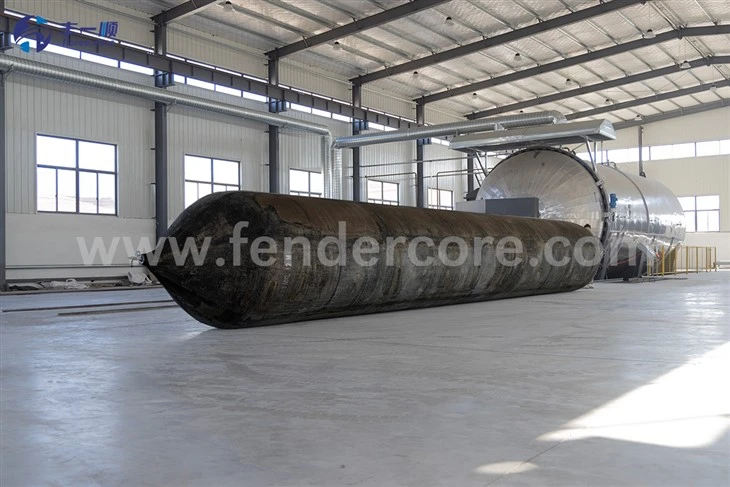
If you're in the market for high - quality ship salvage airbags, we offer a wide range of products, including Marine Ship Airbags, Air Lifting Bags, and Marine Salvage Lift Bags. Our airbags are designed to perform optimally in both fresh water and salt - water environments, with advanced materials and coatings to ensure durability and reliability.

We invite you to contact us for more information about our products and to discuss your specific requirements. Whether you're involved in a small - scale salvage operation or a large - scale marine project, our team of experts is ready to assist you in finding the best solution for your needs.
References
- Archimedes' Principle: A fundamental law of physics regarding buoyancy.
- Marine Engineering Textbooks: Provide in - depth knowledge about the properties of fresh water and salt water and their impact on marine equipment.
- Industry Standards and Guidelines: For the manufacturing and use of ship salvage airbags.